
2026/08/06
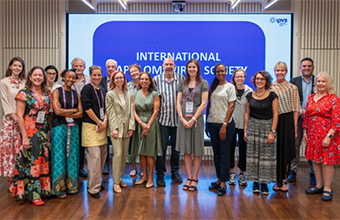
The 37th International Papillomavirus Conference (IPVC 2025), organized by the International Papillomavirus Society (IPVS), was held in Bangkok, Thailand, from October 23 to 26, 2025. Under the theme “Research toward the Global Elimination of HPV-Related Diseases and Cancers,” the conference brought together 1,435 researchers, clinicians, and experts from 104 countries and regions worldwide to exchange the latest advances in HPV research, prevention, and clinical management.
REBACIN® Study Selected for Oral Presentation
At IPVC 2025, the REBACIN® research team’s study, “Pharmacokinetics of REBACIN® Vaginal Delivery: Tissue Distribution, Nuclear Uptake, and Optimal Dosing for Enhanced Efficacy,” was selected for an oral presentation. Dr. Daifei Wu presented the findings on October 26 during the Clinical Science session, sharing the team’s latest research on the local pharmacokinetics, tissue distribution, and cellular uptake of REBACIN® following vaginal administration.
IPVC 2025 marked the 12th consecutive International Papillomavirus Conference at which the REBACIN® research team presented its research findings and the 4th time a REBACIN® study was selected for oral presentation, reflecting the team’s continued engagement with the international HPV research community.


Study Background and Design
REBACIN® is an investigational biologic developed for persistent high-risk HPV (hrHPV) infection. This study evaluated vaginal administration as a localized delivery approach to enhance drug exposure at the site of infection while minimizing systemic exposure.
The study assessed systemic absorption, local tissue distribution, intracellular localization, and dosing frequency using animal models, cervical cancer cell lines, and clinical data.
Key Findings
1.Minimal systemic absorption:Following vaginal administration in SD rats, systemic absorption remained very low, reaching only 1.17% after three consecutive doses.
2.Sustained local distribution:REBACIN® rapidly reached local reproductive tissues and was retained in cervical tissue for more than 24 hours, with distribution highest in vaginal tissue, followed by the cervix and fallopian tubes/uterus.
3.Selective intracellular localization: REBACIN® entered the cytoplasm and nuclei of HeLa and CaSki cervical cancer cells, supporting its proposed mechanism involving inhibition of HPV E6/E7 expression.
4.Support for dosing optimization: HPV clearance was 81.25% (13/16) with daily dosing compared with 72.73% (8/11) with alternate-day dosing, providing clinical evidence for further optimization of the dosing regimen.
Significance of the Study
The study further characterized the local pharmacokinetics, tissue distribution, intracellular localization, and dosing of REBACIN® following vaginal administration, providing additional evidence for its localized mechanism of action and continued clinical development.
Since the REBACIN® research program began in 2000, the R&D team has focused on persistent hrHPV infection and the viral oncogenes E6/E7. The findings presented at IPVC 2025 further strengthen the scientific evidence supporting this research strategy and its clinical translation.